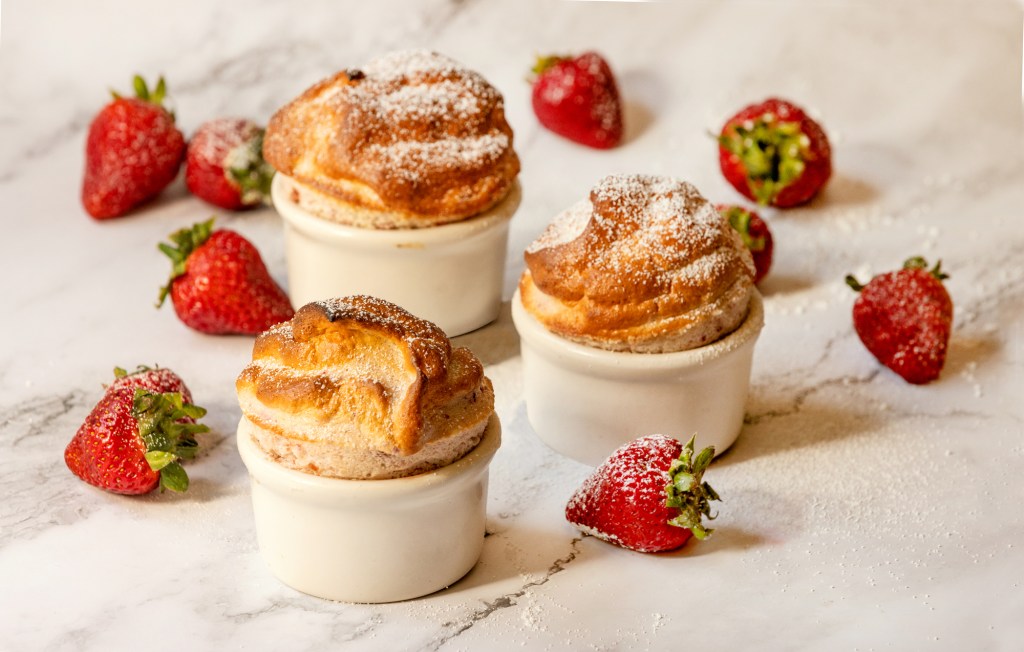
Learn how to make a variety of soufflés from savory to sweet!

For some reason soufflés seem to intimidate many cooks and they really shouldn’t. For me they are “Grandma food”. I can remember my Grandmother, who I spent my early years with, making them often usually for what we called “supper”. On the ranch in the mountains of Colorado where we lived, supper, the evening meal, was usually lighter and quicker than the main meal of the day, which we ate at lunchtime. In many respects soufflés are also “farm foods” in the sense that they are made from very basic and generally available ingredients on every farm: eggs, butter, milk, flour and a little cheese, to which you can add whatever else may be on hand.

The name soufflé comes from the French verb souffler and roughly translates “to breathe”, “to whisper” or “to blow up”. This aptly describes the delicate, fragile, ethereal texture that seems to disappear in your mouth as you eat it. Contrary to popular belief, that delicate result can be achieved without anything much in the way of talent or expertise – – – I promise!! For our exploration here I am focusing on warm, oven-baked soufflés, i.e., those straight out of the oven. The term soufflé is also applied to cold, sweet preparations in which the airy texture is achieved by gelatin or whipped cream or both. To purists these are more accurately described as mousses.
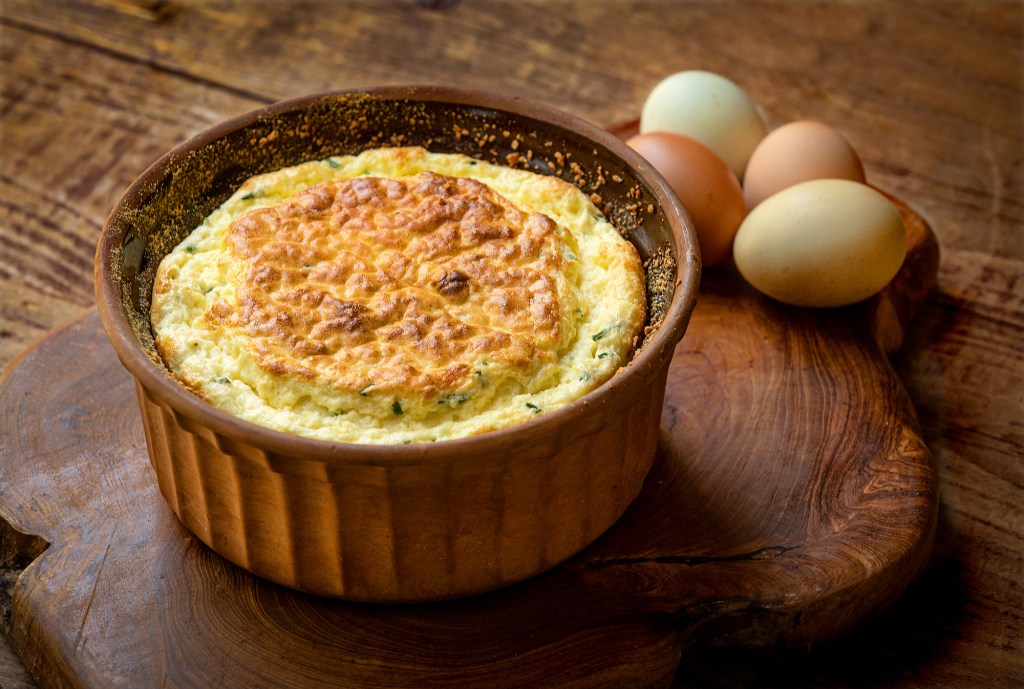
Soufflés are pretty simple. They are made up of two components: A base that is usually a thick milk based white sauce (what the French call béchamel) and whipped egg whites. The latter are folded in just before the mixture is baked in the oven and are what give soufflés their unique texture. In the oven, the air trapped in the egg whites expands as it heats causing the whole mixture to rise. The base is the flavor carrier, the whites provide the puff. I’ll just betcha that once you’ve made a couple of these, they’ll become a regular part of your repertoire!
Download the recipes here:
 Chef John Ash
Leave a comment